
The Paris Court of Appeal issued its ruling on Tuesday, July 7, 2025, in the National Rally’s parliamentary assistants case. Marine Le Pen’s period of ineligibility for public office was reduced to 45 months on appeal, clearing the way for a fourth presidential bid. However, this legal victory comes with a personal dilemma: the National Rally leader will be required to wear an electronic ankle monitor for one year, a condition she has repeatedly said she would not accept while campaigning.
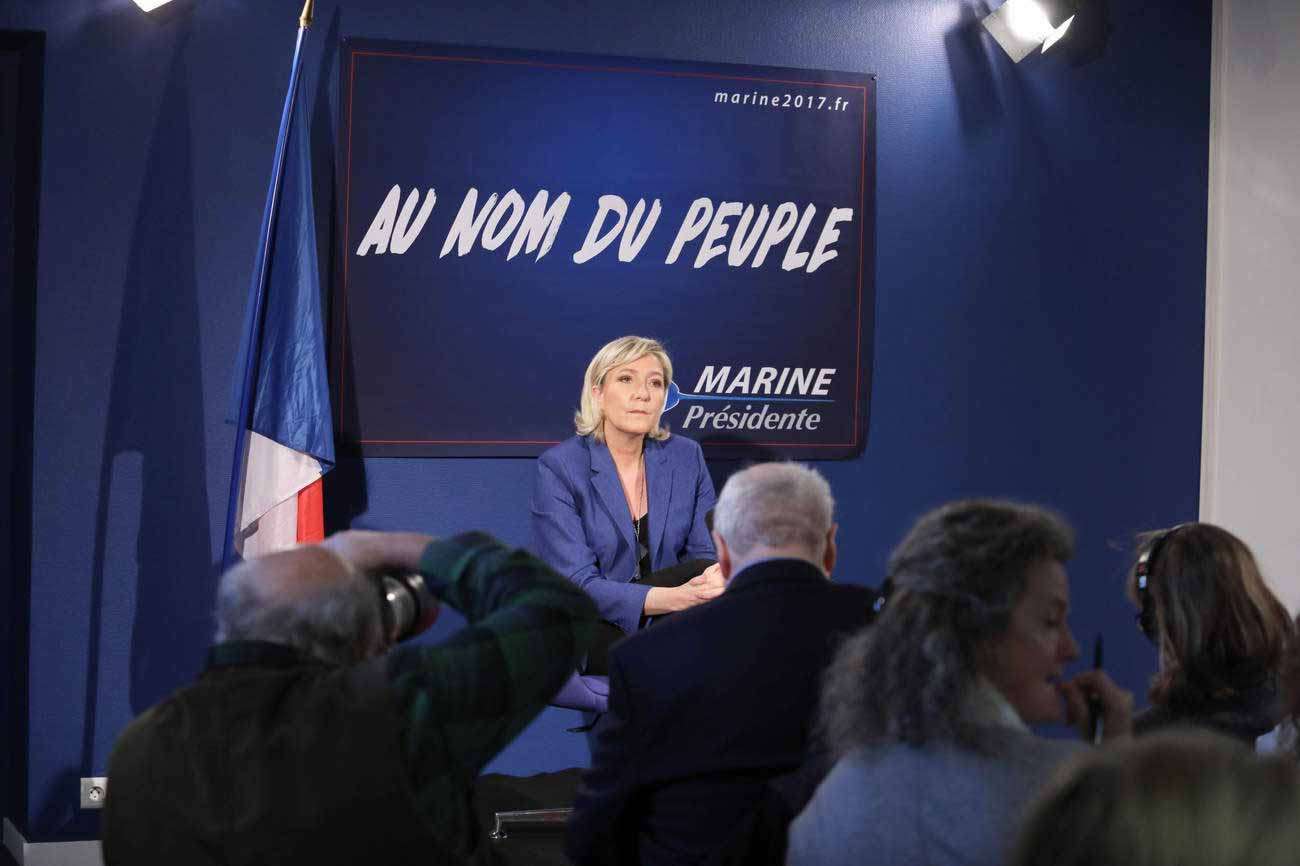
Convictions Upheld: Guilty of Misappropriating Public Funds
The Paris Court of Appeal upheld Marine Le Pen’s conviction in the case involving parliamentary assistants employed by members of the European Parliament. She was found guilty of misappropriating public funds and of aiding and abetting that offense.
The presiding judge repeatedly emphasized the seriousness of the misconduct, noting that it had continued over an eleven-year period spanning three parliamentary terms, despite repeated warnings from the European Parliament about compliance with its rules.
The figures speak for themselves: €2.8 million in misappropriated funds. The court found evidence of “an operating system designed to divert European funds for purposes other than those for which they were intended.” According to the ruling, this systematic scheme was established under the leadership of Jean-Marie Le Pen and later continued under Marine Le Pen herself.
As part of her sentence, Marine Le Pen received a three-year prison term, including two years suspended and one year to be served under an alternative custodial arrangement. She was also fined €100,000. During the one-year custodial portion of her sentence, she will be required to wear an electronic ankle monitor.
Reduced ineligibility changes the political landscape
This significant reduction marks a major turning point in the National Rally leader’s legal battle.
Her attorney, Rodolphe Bosselut, described the ruling as “a good start” and a “partial victory,” stressing that the reduction of the ineligibility sentence was “an extremely important point.” He also highlighted the presiding judge’s remarks emphasizing voters’ freedom to choose from the full range of candidates.
Electronic monitoring : A major campaign obstacle
During an exclusive interview with BFMTV in February, Marine Le Pen stated unequivocally: “You cannot run a campaign under those conditions.”
She was referring to the mandatory electronic ankle monitor that accompanies a custodial sentence served outside prison. That statement clearly foreshadowed the dilemma she now faces.
The legal situation has become paradoxical. Marine Le Pen is now legally eligible to run for president. However, wearing an electronic ankle monitor for an entire year could severely limit her ability to conduct a normal presidential campaign.
Such a campaign requires constant travel, rallies, media interviews, and visits across the country—activities that could prove difficult to reconcile with electronic monitoring, particularly in the eyes of the public.
Other convictions in the parliamentary assistants case
Marine Le Pen was not the only person convicted.
Fernand Le Rachinel, the first defendant to appear before the court, received a reduced sentence on appeal: two years of suspended imprisonment instead of three, a €15,000 fine, and one year of ineligibility instead of the three years imposed at trial.
Former National Rally Member of the European Parliament Bruno Gollnisch, who was absent from the hearing, was sentenced to three years in prison and one year of ineligibility, a lighter sanction than the three-year ineligibility period imposed by the lower court.
French lawmaker Julien Odoul was also among the defendants whose case was heard on appeal.
Political reactions
Opposition politicians argued that the core issue remained unchanged regardless of who ultimately represented the National Rally in the presidential election.
Boris Vallaud, leader of the Socialist group in the National Assembly, emphasized that respect for the rule of law and the justice system remained the overriding priority.
Green Party lawmaker Benjamin Lucas-Lundy argued that “whether it’s Marine Le Pen or Jordan Bardella, it changes nothing” regarding the National Rally’s political platform. He reiterated that the party “stole from European taxpayers” and “stole from the French people,” allegations that, he noted, had now been upheld twice by the courts.
Socialist lawmaker Philippe Brun described Marine Le Pen and Jordan Bardella as “interchangeable candidates,” suggesting that choosing between them would make little political difference for voters.
What comes next
Marine Le Pen left the courthouse without speaking to reporters and headed directly to National Rally headquarters, where senior party officials had convened a crisis meeting.
Her silence contrasted with her attorneys’ public statements and suggested that the party leadership intended to carefully evaluate the full implications of the historic ruling.
The stakes extend well beyond the legal issues.
Marine Le Pen must now choose between pursuing a fourth presidential campaign and remaining consistent with her long-held position that a presidential campaign cannot realistically be conducted while wearing an electronic ankle monitor.
Jordan Bardella, the party’s vice president, remains the fallback candidate should she decide not to run.
Patrick Maisonneuve, attorney for the European Parliament, underscored the significance of the appellate ruling, stating that the court had confirmed that “European taxpayers’ and French citizens’ money” had been diverted through “an organization that operated for years” under the leadership of the National Front.
Impact on the national rally’s electoral strategy
Regardless of Marine Le Pen’s decision, the National Rally has a credible alternative in Jordan Bardella.
Nevertheless, the possibility that Marine Le Pen could legally run reshapes the party’s internal dynamics and the balance of power within its leadership.
National Rally lawmaker Thomas Ménagé, who represents the Loiret department, said that “nothing changes” for the party’s members of Parliament, who would continue their legislative work regardless of who ultimately becomes the party’s presidential nominee.
The Court of Appeal’s Trap
The Court of Appeal’s ruling places Marine Le Pen in a genuine Catch-22.
Legally, she achieved a significant victory through the substantial reduction of her ineligibility sentence.
Politically and practically, however, the electronic ankle monitor remains a serious obstacle to conducting a conventional presidential campaign.
Her silence upon leaving the courthouse suggests she is taking time to consult with close advisers, party officials, and campaign strategists before deciding on the best course of action for both the National Rally and her own political future.
By allowing Marine Le Pen to remain eligible to run for president while simultaneously requiring her to wear an electronic ankle monitor, the court has placed both the National Rally and its leader in an exceptionally difficult strategic position.